
Deal Management for Sales Engineers

Install a deal operating system your SEs can run, under pressure, without heroics.


Most presales training improves skills. This program improves judgment.
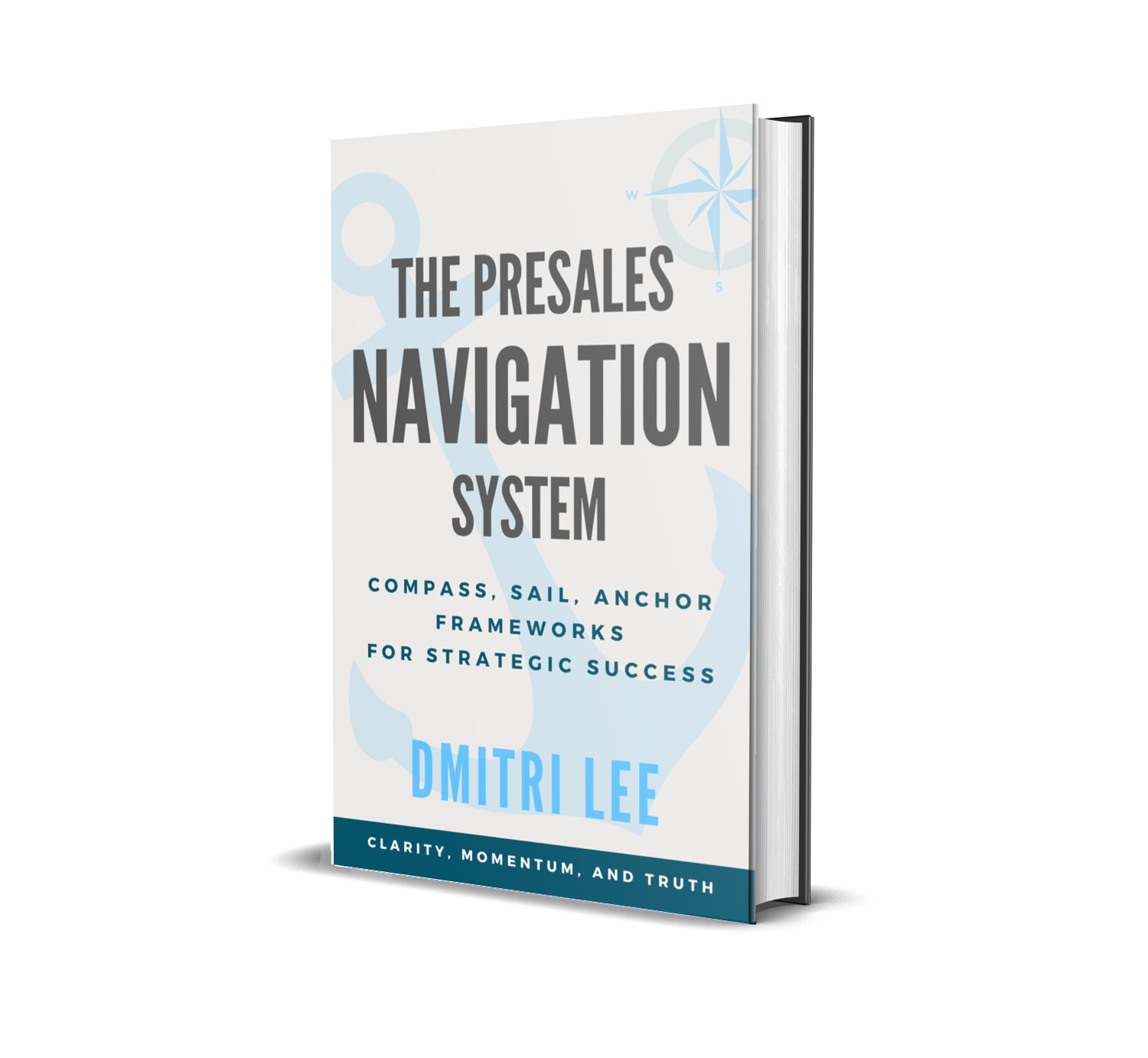
Deal Management for Sales Engineers is foundational training built on COMPASS, SAIL, and ANCHOR, designed to make complex enterprise deals deliberate, measurable, and repeatable.
Who this is for
This program is built for:
Sales Engineers, Senior SEs, Principal SEs working complex, multi-stakeholder enterprise deals
Teams experiencing deal drift, false momentum inconsistent execution, or late stage surprises
Organizations that want cleaner forecasting inputs and fewer “we thought we had it” losses
This is NOT for teams looking for:
Demo choreography
Persuasion tactics
A deal rescue workshop

The framework you enforce
This program is built on three linked lenses:
COMPASS (Deal Integrity): Is the deal sound?
SAIL (Deal Motion): Is the deal moving correctly?
ANCHOR (Deal Durability): Will it hold when pressure increases?
Your team learns how to run every deal through these lenses on purpose, with the same standards every time.

What this training is
This training installs a deal operating system, not skills or tactics.
It gives SEs a shared language and a repeatable method to inspect deal integrity, drive intentional motion, and ensure the deal will hold when pressure increases.
It is not persuasion training. It is judgment training.

Format
8 modules total
Each module is approximately 2 hours
Instructor-led and highly interactive
Uses one “Anchor Deal” throughout for applied thinking
No Deal Labs, no deal fixing, no demos

What changes after this training
By the end of the program, your SEs will be able to:
Run deals deliberately instead of reactively
Explain why a deal should exist, not just how the product works
Detect risk, misalignment, and false urgency early
Move deals forward without pressure, escalation, or heroics
Make deals repeatable, not just winnable
Why customers say yes to this
Because it is safe.
This training:
Reduces deal risk instead of increasing it
Removes pressure and replaces it with clarity
Protects post-sale trust
Produces more honest forecasts and cleaner wins

Curriculum overview (module-by-module)

Module 1
Clarity Over Charisma + Ownership of Discovery
What it trains: replacing momentum and polish with explicit clarity, and taking ownership of discovery rather than inheriting assumptions.
Why it matters: deals fail when “everyone sounds aligned” but nothing is actually true yet.

Module 2
Multiplication of Craft + Protecting the Promise
What it trains: moving from individual heroics to system thinking, externalizing judgment so execution survives handoffs, and protecting customers from over-commitment that becomes post-sale failure.
Why it matters: teams do not scale on talent, they scale on shared standards and protected promises.
Module 3
Alignment Before Action + Saying No as Leadership + Strategy in Every Stage
What it trains: spotting false progress, stopping it early, saying no without friction, and carrying strategy through every stage rather than treating it as a discovery event.
Why it matters: most deal failure is approved by silence, and “yes” without clarity creates expensive problems later
Module 4
Storytelling + Action (Activity is not a Progress)
What it trains: shaping the customer’s internal narrative and converting clarity into customer-owned action.
Why it matters: activity is not progress, and deals die when the story has no gravity inside the account.
Module 5
Insight + Leadership
What it trains: delivering uncomfortable truth, creating direction without authority, surfacing insight early, and leading when no one else is leading.
Why it matters: complex deals stall when teams avoid insight and hide behind “next steps.”
Module 6
Ambition + Need
What it trains: uncovering the future state that gives the deal gravity, validating real urgency, and stopping the habit of borrowing urgency from the seller.
Why it matters: urgency that isn’t earned collapses the moment the customer gets busy.
Module 7
Control + HOW (Trade-offs)
What it trains: defining success ownership, surfacing the cost of decision paths, and installing discipline under pressure.
Why it matters: surprises happen when trade-offs stay unspoken and “how we’ll win” is never made explicit.
Module 8
Outcome + Repeatability
What it trains: forcing the deal to earn its close, defining customer-owned outcomes, and pressure-testing whether the win can be delivered again.
Why it matters: closing is not the finish line, and repeatability is the difference between a win and a sustainable motion.
NEXT STEP
If you want your SE team running enterprise deals with consistent judgment, clear inspection standards, and fewer late-stage surprises, request the program overview and delivery options.